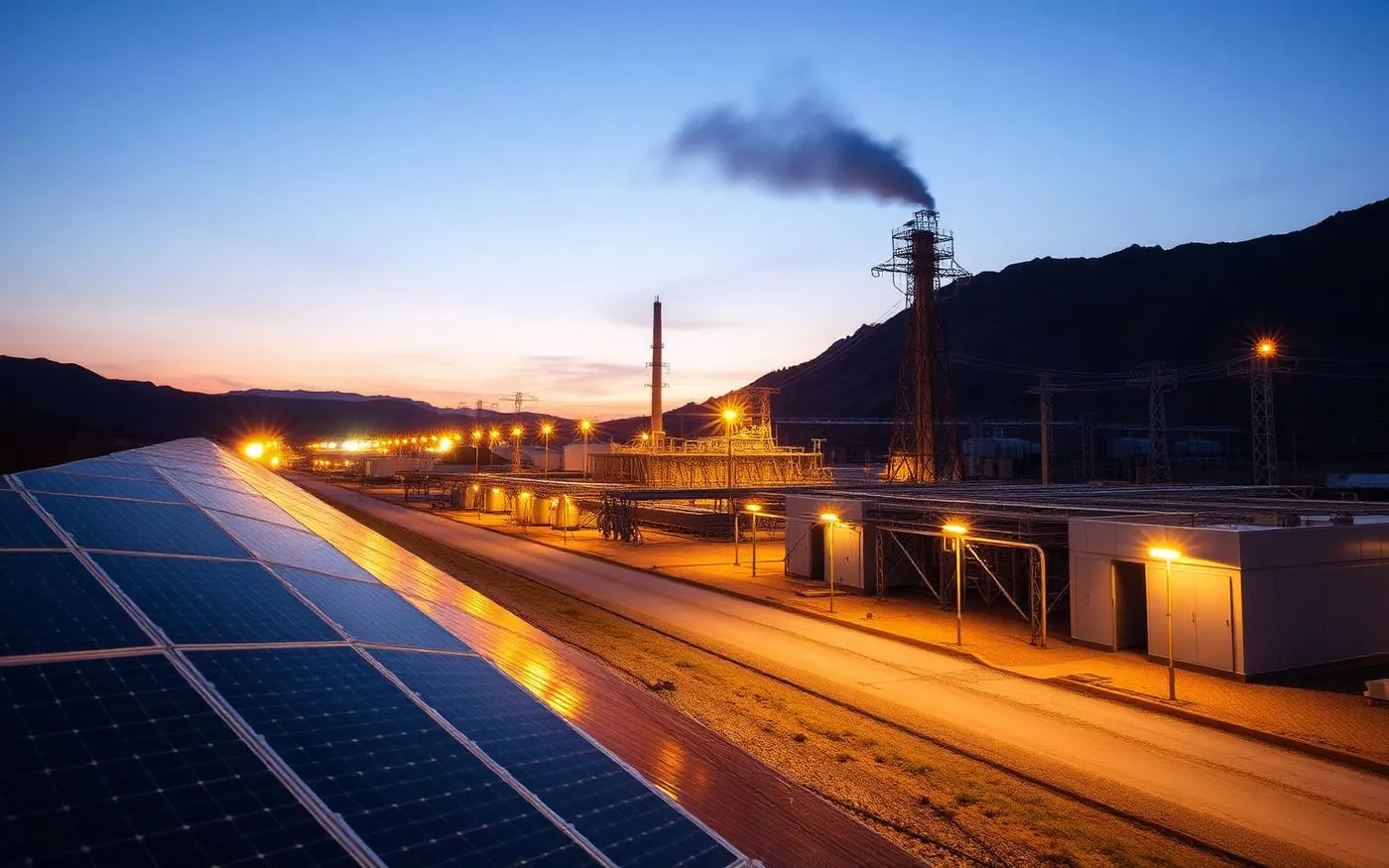
Remote operations have historically run on diesel because it is portable and financeable. Both of those advantages have eroded as hybrid solar, storage and grid connection projects have become bankable on a fifteen-year horizon.
The economics stopped being a trade-off
When a power purchase agreement lands below the delivered diesel cost, the emissions reduction is a by-product of a procurement decision. That is the only version of decarbonisation that survives a downturn.
What to check in the disclosure
Contracted versus installed capacity, the share of load actually displaced, and whether the reported reduction is measured or modelled.
Grid connection as the underrated lever
Off-grid renewable hybrid systems attract most of the attention, but for operations located within a plausible transmission distance of an existing grid, connection can be a more decisive step than any on-site generation project. Grid power, particularly where the national mix includes a meaningful share of hydro or other low-carbon generation, can cut both emissions and unit costs more reliably than a bespoke renewable build that still requires diesel or gas backup for periods of low wind or sun. The calculation depends heavily on grid reliability and tariff structure, which vary enormously by jurisdiction, but it deserves to be assessed on the same footing as a stand-alone renewable project rather than dismissed by default.
Battery storage economics have also shifted enough in recent years that a hybrid system without storage now looks like an increasingly conservative design choice, since storage is often what allows a renewable share above the range that intermittency alone would otherwise cap.
The financing side of the equation
Long-dated power purchase agreements are only bankable if the off-taker's own credit and mine life are bankable, which is a particular challenge for smaller or shorter-life operations that cannot offer a lender the tenor a renewable developer needs to amortise its capital cost. This has tended to concentrate the most favourable power contracts among larger, longer-life operations, leaving smaller producers more exposed to volatile diesel and grid tariffs even where the underlying renewable resource at their site is just as strong.
Multilateral development finance and blended finance structures have begun to fill some of that gap, underwriting a portion of the off-taker risk to bring smaller mines within reach of the same renewable economics that larger peers already enjoy. Whether that support scales fast enough to matter across the sector as a whole remains an open question.