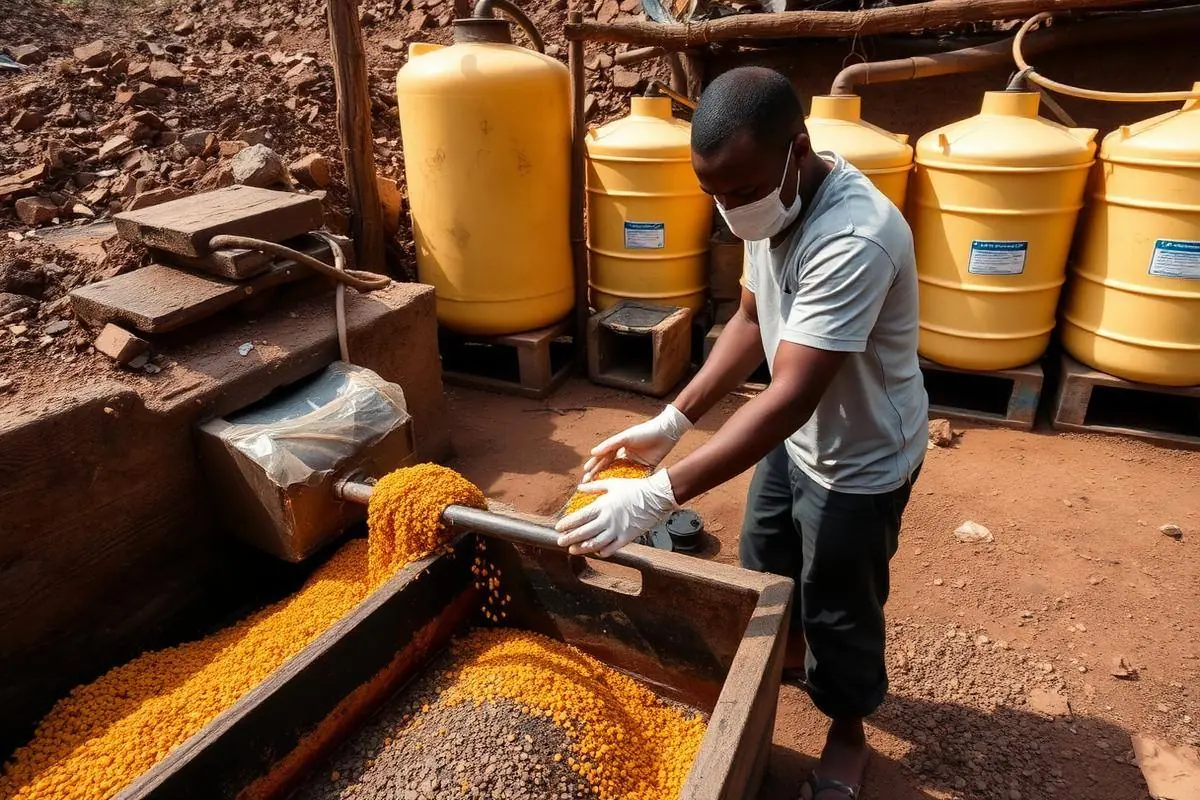
Mercury amalgamation remains the default recovery method across large parts of Uganda's artisanal gold sector, years into commitments made under the Minamata Convention. Demonstration sites have proved that mercury-free processing works. Diffusion beyond those sites has been the failure.
Why adoption stalls
Mercury is cheap, portable and immediately effective at the pit. Gravity and borax-based alternatives require capital, training and a processing centre within reach. Where none of those exist, miners rationally keep using what works today.
The compounding cost
Mercury exposure is cumulative and disproportionately affects women and children working in processing rather than digging. Contaminated tailings then move into water systems shared with agriculture, which converts an occupational-health problem into a district-wide one.
What would actually change the curve
Financing centralised mercury-free processing hubs tied to cooperative licences, so the alternative is nearer than the mercury dealer. Buyers can accelerate this by refusing parcels that cannot evidence mercury-free processing, and by paying a verified premium for those that can.